Imagine standing at the helm of your team, confident in your vision and drive, only to hear whispers that your communication style leaves others feeling sidelined. This disconnect between how leaders see themselves and how they’re perceived by others is all too common in high-stakes environments. Enter the 360-degree assessment – a powerful, multi-angle feedback tool that’s transforming leadership development across the USA.
By gathering anonymous insights from bosses, peers, direct reports, and even clients, it shines a light on hidden strengths, glaring blind spots, and untapped potential. Far from a simple survey, this process fosters profound self-awareness and actionable growth, much like a personal GPS recalibrating your path to peak performance. At Leadership Coach Group, we weave this into our executive coaching services to help leaders not just survive but thrive in today’s dynamic workplaces.
Core Definition and Purpose
At its heart, a 360-degree leadership assessment, often shortened to “360 assessment” collects comprehensive feedback on a leader’s competencies from every direction. Traditional evaluations rely solely on a manager’s view, but this method casts a broader net, rating skills like strategic decision-making, emotional intelligence, conflict resolution, and team inspiration. Developed in the 1950s and refined over decades, it’s now a staple in Fortune 500 companies for talent development, not punitive reviews.
The goal? Bridge the gap between self-perception and reality. Leaders often overestimate their empathy or delegation skills while undervaluing their impact on morale. Leadership Coach Group’s 360 degree assessment services customize this to pinpoint exact growth areas, pairing it with tools like CliftonStrengths or DiSC for richer analysis.
Who Participates and What They Rate
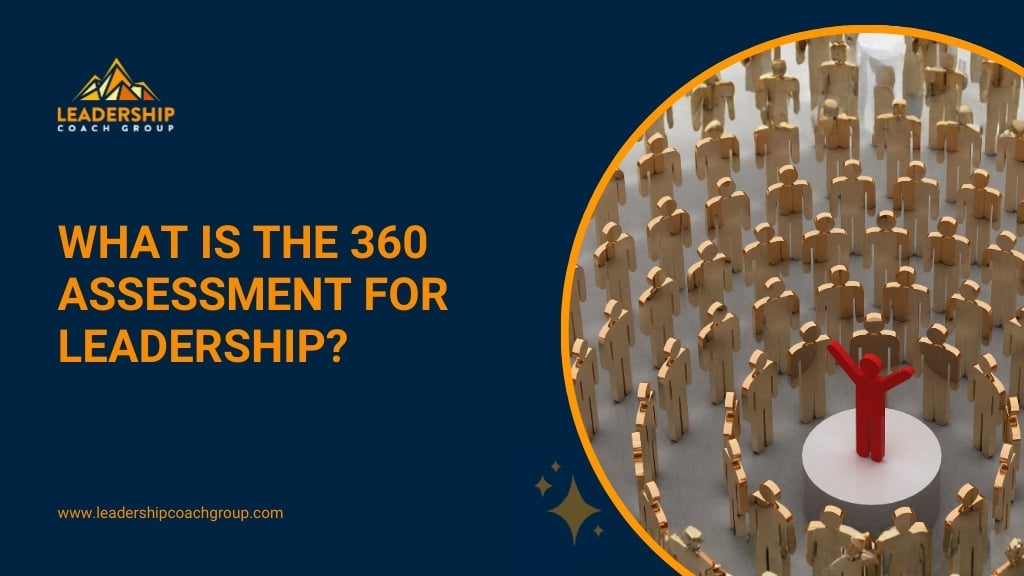
Raters form a “circle” around the leader: typically 8-15 people, including the direct supervisor (1-2), selected peers (3-5), direct reports (all or a sample of 5-8), the leader’s self-assessment, and optional external contacts like clients. Everyone responds anonymously via online questionnaires with 50-100 items, using Likert scales (e.g., 1-5 from “rarely demonstrates” to “consistently excels”) and open-ended questions for qualitative depth.
Competencies span categories like “drives results,” “builds relationships,” and “navigates change.” Aggregated reports visualize data through radar charts, bar graphs, and verbatim comments, highlighting consistencies (e.g., “innovative”) versus discrepancies (e.g., self-rates high on listening, but reports disagree).
Detailed Step-by-Step Implementation
The process unfolds in six clear phases. First, a kickoff meeting defines goals – say, preparing for promotion or improving team retention. Second, select and invite raters with clear instructions emphasizing confidentiality. Third, leaders complete self-assessments simultaneously. Surveys run for 2-3 weeks, followed by data compilation into polished reports (1 week). A certified coach then facilitates a debrief, unpacking insights without blame. Finally, co-create a 90-day action plan with metrics that are reviewed quarterly.
Leadership Coach Group streamlines this with their advanced platform, starting with a free discovery consultation. This ensures seamless integration, tracking habit formation, and linking to the proven ROI of Executive Coaching.
Proven Benefits and Impact Metrics
Participants may see 10-20% gains in targeted competencies within six months, per studies from the Center for Creative Leadership. Organizations report 15% higher engagement scores and reduced turnover as leaders model vulnerability and improvement. For individuals, it can accelerate promotions; one meta-analysis found 360 users twice as likely to advance.
Teams benefit from ripple effects: better delegation frees managers for strategy, while heightened empathy boosts psychological safety. Leadership Coach Group’s affordable, award-winning model, lauded by Manage HR Magazine, delivers these at scale, from emerging leaders to C-suite executives across industries.
Overcoming Pitfalls with Best Practices
Potential hurdles like rater fatigue or bias get addressed through pre-survey training and diverse rater pools. Frame it as a growth opportunity, not judgment, and limit frequency to every 12-18 months. Pair with coaching to convert data into deeds. Without it, insights gather dust.
Diverse coaches at Leadership Coach Group match your context, ensuring cultural fit and maximizing relevance, whether for tech startups or established firms.
Applications Across Leadership Levels
Mid-level managers use it to hone influence without authority; executives refine boardroom presence. In team coaching, aggregated 360s reveal systemic issues like siloed communication. Leadership Coach Group’s one-on-one, team, and assessment suites apply this holistically, supercharging outcomes via webinars and diagnostics.
Frequently Asked Questions on Leadership Assessment
What exactly is a 360-degree leadership assessment?
An anonymous multi-rater feedback tool evaluating skills from supervisors, peers, reports, self, and clients to reveal leadership strengths and gaps for targeted development.
How many raters are typically involved?
8-15 per leader: 1-2 bosses, 3-5 peers, 5-8 reports, self, and externals for a full-circle view.
What does the full process timeline look like?
4-6 weeks total: 2-3 for surveys, 1 for reports, plus debrief and planning; effects compound over 3-6 months.
Is 360-degree feedback for evaluations or growth?
In the beginning, it is recommended to be strictly developmental. Generally, it is best used to build self-awareness and skills, not tied to pay or firing decisions.
How does the Leadership Coach Group enhance 360 assessments?
Via custom coaching, tools like DiSC, Myers-Briggs, progress platforms and coaching sessions with tailored leadership elevation.