
When pressure rises, leadership is tested. Not because leaders suddenly lose their skills, but because stress can temporarily disconnect them from their best thinking.
Every leader faces moments when the stakes feel high. A critical decision must be made. A team conflict escalates. A major project falls behind schedule. In these moments, leaders are expected to remain composed, strategic, and decisive.
Yet neuroscience tells us something important: under pressure, even experienced leaders can shift from thoughtful decision-making into reactive behavior.
The difference between effective leaders and struggling leaders is not the absence of pressure. It’s the ability to maintain clarity within it.
At Leadership Coach Group, we believe leadership excellence begins with self-awareness. The ability to remain clear, composed, and intentional under pressure is one of the defining characteristics of effective leadership.
In this blog, we’ll explore why pressure can disrupt even the most capable leaders, what happens in the brain during high-stakes situations, and practical strategies for staying focused when emotions and uncertainty are running high. You’ll learn how to recognize reactive patterns, navigate difficult conversations with greater confidence, and develop habits that help you lead with clarity when it matters most.
Why Pressure Changes How Leaders Think
Leadership pressure rarely comes from a single source. More often, it stems from a combination of:
- Competing priorities
- Organizational uncertainty
- Tight deadlines
- High-visibility decisions
- Challenging interpersonal dynamics
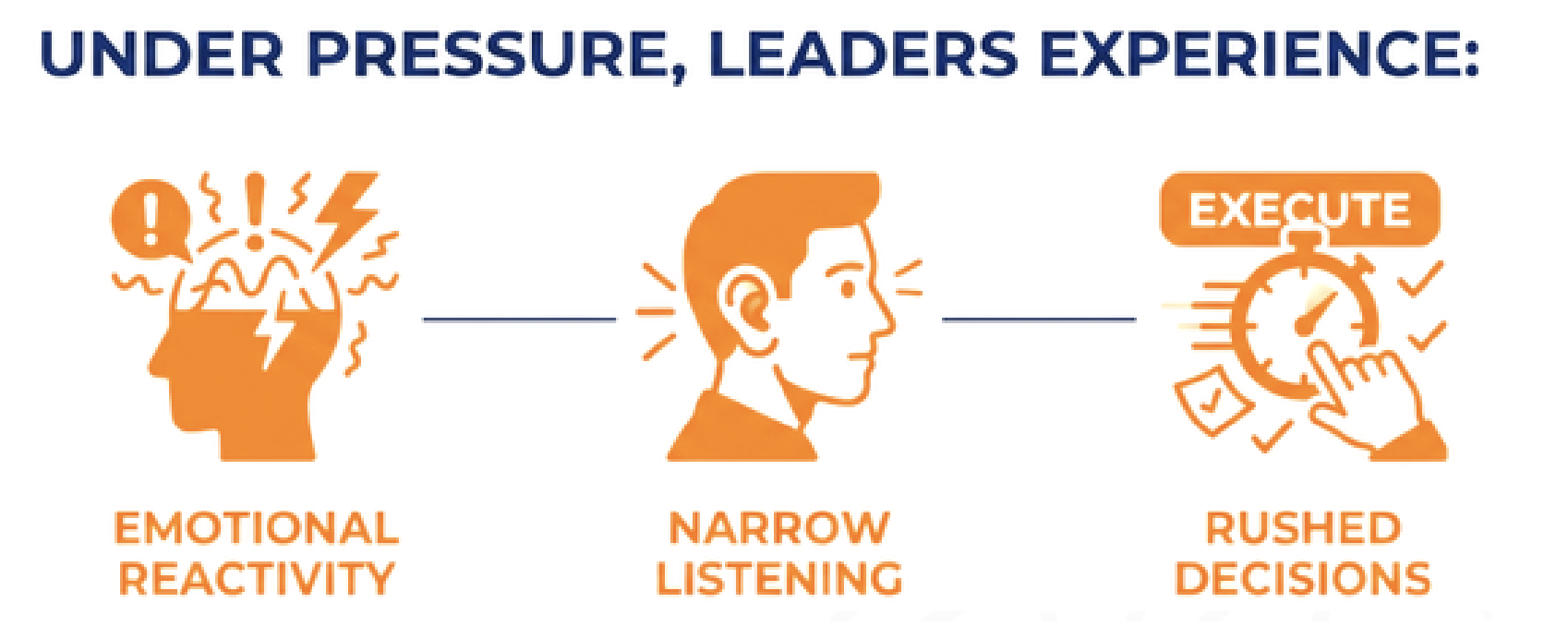
When stress intensifies, the brain naturally shifts from executive functioning to threat response. Strategic thinking becomes harder to access. Listening narrows. Emotional reactions increase. Decisions become rushed.
This is a human response. The challenge is recognizing when this shift is happening before it begins driving your behavior.
Signs You May Be Leading Reactively
Under pressure, leaders often experience:
- Increased defensiveness
- Reduced patience
- Difficulty hearing alternative perspectives
- Impulsive decision-making
- A tendency to assume intent rather than seek understanding
If these patterns sound familiar, you’re not alone. The good news is that leadership clarity can be strengthened through intentional practice.
The Leadership Pause: A 30-Second Reset
One of the most powerful tools is the Leadership Pause, a simple four-step process designed to interrupt automatic reactions and restore strategic thinking:
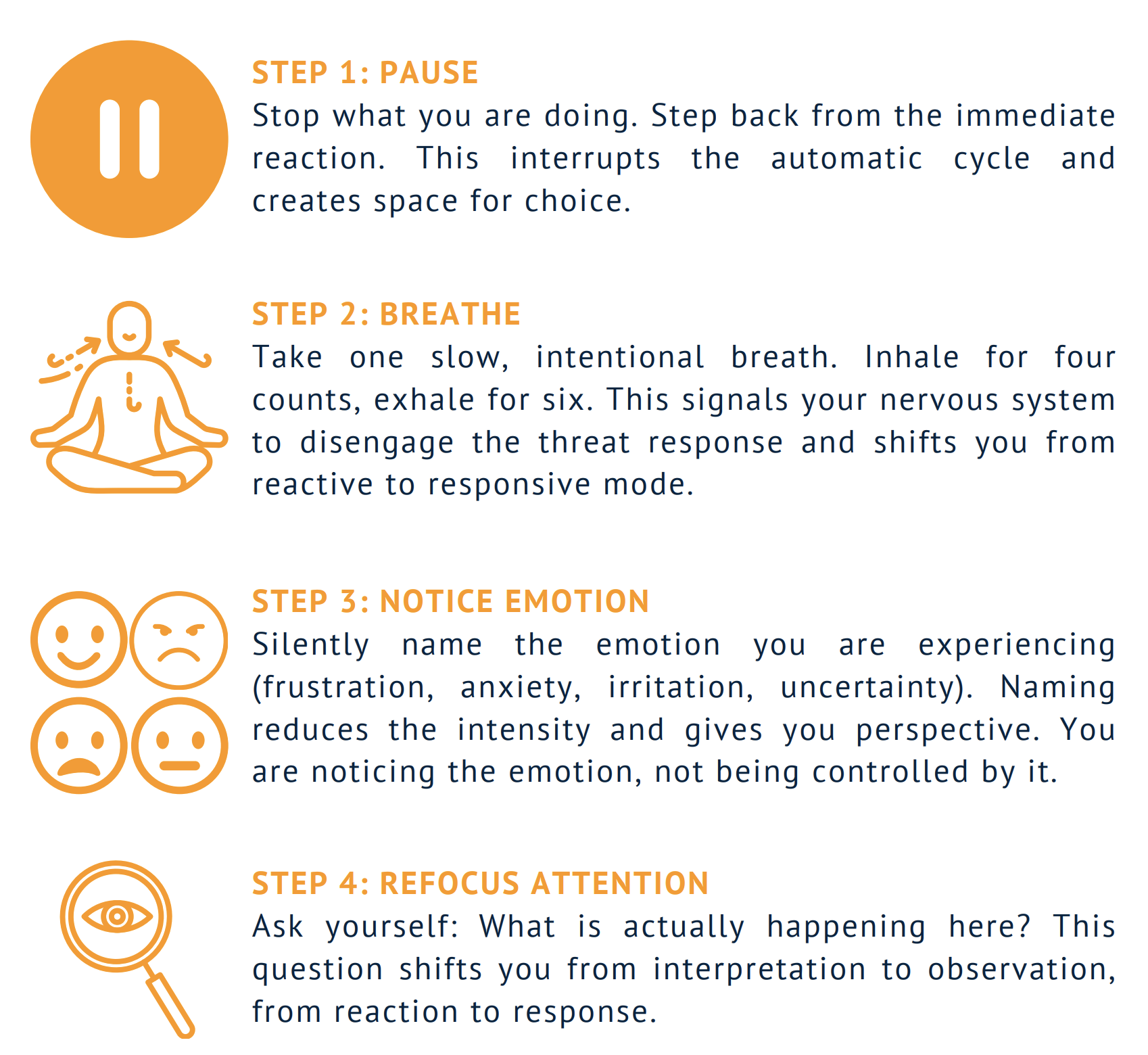
The Leadership Pause transforms a familiar sequence:
Trigger → Emotion → Assumption → Reaction
into a more productive one:
Trigger → Pause → Awareness → Choice
Over time, this practice becomes a powerful form of self-leadership.
The Leadership Skill Most Leaders Overlook: Separating Facts from Stories
When pressure rises, leaders often blend three elements together:
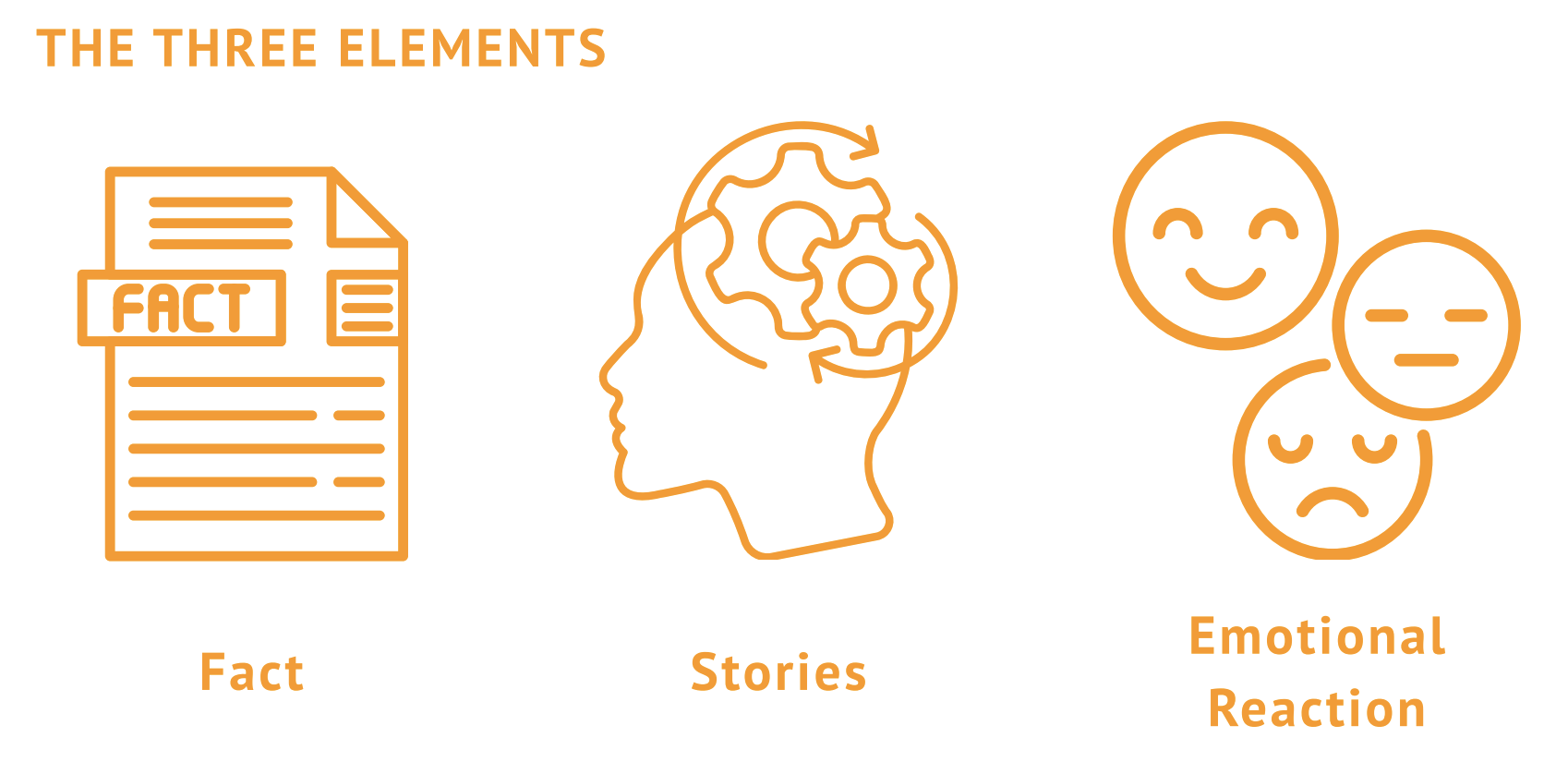
The Clarity Model teaches leaders to separate these elements before acting.
Consider this example:
Fact: The report was submitted two days late.
Story: “They don’t care about deadlines.”
Emotional Reaction: Frustration.
The challenge is that stories often feel like facts.
When leaders respond to their interpretations rather than reality, conversations become more defensive, trust erodes, and decisions become less effective.
Before responding, ask:
- What do I know for sure?
- What story am I adding?
- What am I feeling right now?
These three questions create space for better judgment and stronger leadership.
How Curiosity Creates Clarity
One of the fastest ways to restore clarity in a difficult conversation is through thoughtful questions.
There are three powerful questions that help move teams from defensiveness to problem-solving:
1. What are we trying to accomplish?
This redirects attention toward shared goals rather than competing viewpoints.
2. What are we seeing differently?
This encourages perspective-taking without assigning blame.
3. What information might we be missing?
This question reintroduces curiosity and expands collective thinking.
Notice how these questions align with principles we explored in our article “Leading with Heart: Emotional Intelligence for Impactful Leadership,” where perspective-getting and curiosity were highlighted as essential leadership skills.
Both approaches reinforce a simple truth:
Curiosity lowers defensiveness. Judgment raises it.
Three Habits of Leaders Who Stay Steady Under Pressure
Leadership clarity is not built in a single moment. It develops through consistent habits. Steady leaders practice three behaviors repeatedly:
1. Slow the Moment
Instead of reacting immediately, they create a brief pause.
Even three seconds can make the difference between reacting emotionally and responding strategically.
2. Name the Reality
Rather than avoiding tension, they acknowledge it.
Examples:
- “I can feel tension in the room.”
- “This conversation feels stuck.”
- “I notice I’m becoming defensive.”
Naming reality often reduces its power.
3. Ask Before Telling
When pressure rises, many leaders default to directing, correcting, and persuading.
Steady leaders begin with curiosity.
Instead of:
“That won’t work.”
They ask:
“Help me understand how that would work.”
This subtle shift creates psychological safety and keeps conversations productive.
Final Thoughts: Lead with Clarity When Pressure Rises
In this blog, we talked about why pressure can shift leaders into reactivity, how a simple pause can restore clearer thinking, and why separating facts from stories helps leaders make better decisions. We also explored how curiosity, intentional questions, and steady leadership habits can transform tense moments into opportunities for trust and alignment.
Want to learn more?
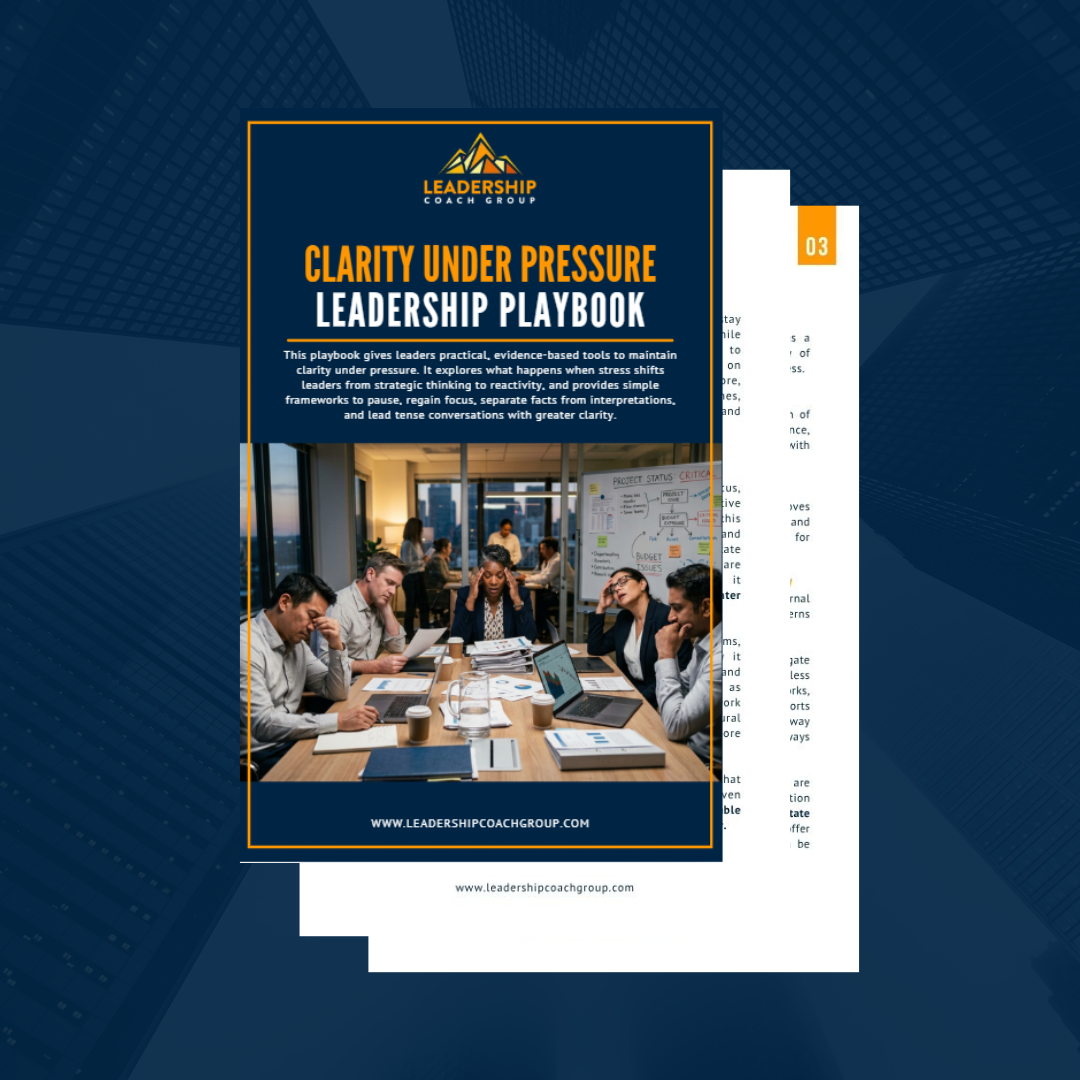 Download the Clarity Under Pressure Leadership Playbook for practical frameworks, reflection exercises, and tools you can use to navigate high-stakes moments with greater confidence and clarity.
Because leadership isn’t about avoiding pressure. It’s about remaining clear inside it.
Frequently Asked Questions
1. How can Leadership Coach Group help leaders improve their ability to stay calm and make better decisions under pressure?
Leadership Coach Group works with executives, managers, and emerging leaders to strengthen self-awareness, emotional intelligence, communication, and decision-making skills. Through personalized coaching, leadership development programs, and practical tools, our coaches help leaders navigate challenging situations with greater confidence and clarity. Learn more about our One-on-One Coaching Services and how we support leadership growth.
2. Where can I find a leadership coach to help me navigate workplace challenges and high-pressure situations?
If you’re looking for guidance on managing difficult conversations, leading through change, or strengthening your leadership presence under pressure, Leadership Coach Group offers experienced coaches who work with leaders across industries. Visit our Meet Our Coaches page to learn more about our coaching team and find the right coach for your leadership journey.
3. Where can I learn more about leadership clarity, emotional intelligence, and executive effectiveness?
Leadership Coach Group regularly publishes articles, leadership resources, webinars, and downloadable playbooks designed to help leaders grow their skills and increase their impact. Explore our Free Leadership Webinars for additional insights, including topics such as Emotional Intelligence, Executive Presence, and Personal Branding for Leaders.