
In today’s hybrid, fast-moving workplaces, leadership isn’t just about delivering results—it’s about how you communicate to get there. Whether you’re coaching a direct report, giving feedback, or aligning on strategy, every conversation is a leadership opportunity. The problem? Most leaders haven’t been taught how to make those conversations meaningful, safe, and effective.
The Conversations That Connect Leadership Playbook from The Leadership Coach Group is a comprehensive, neuroscience-backed guide to mastering the art of intentional communication. In this blog, we’ll unpack the key takeaways, provide actionable strategies, and show you how to apply them in your daily leadership.
“Every conversation is a leadership moment.”
— Conversations That Connect Playbook
Why Communication is Your Hidden Leadership Superpower
According to the playbook, your words don’t just share information, they shape your culture. Leaders set the emotional tone for their teams. And how you speak, listen, and show up in conversation determines whether you build trust or break it down.
6 Strategies for Leadership Conversations That Connect
The playbook offers six clear strategies for making every conversation more impactful. Let’s explore each one with practical applications:
1. Speak with Clarity
Ambiguity breeds confusion. Be direct, specific, and transparent. Instead of saying “This needs work,” try “The report is missing last quarter’s insights, which we need before presenting.”
Clarity, when paired with empathy, builds alignment and trust.
2. Listen with Openness
Put curiosity before judgment. Ask open-ended questions like, “What’s your perspective on this?” Deep listening tells your team they are seen, heard, and valued—a critical element of psychological safety.
3. Respond with Empathy
Empathy isn’t about agreeing; it’s about validating someone’s experience. Responding with “I can see how that would be frustrating. Let’s talk about how we can move forward,” invites collaboration and growth.
4. Be Mindful of Body Language
Your posture, eye contact, and facial expressions speak volumes. Maintain openness by uncrossing your arms, making eye contact, and nodding to show attentiveness.
5. Use Intentional Tonality
The tone you use can de-escalate or ignite a conversation. A calm, steady tone encourages openness—even in tough conversations.
6. Regulate Emotions
When things get heated, take a pause. Breathe. A regulated leader sets the emotional tone for the room. As explored in our article on Executive Presence, emotional regulation is core to gravitas and credibility.
How to Ask Tough Questions Without Creating Conflict
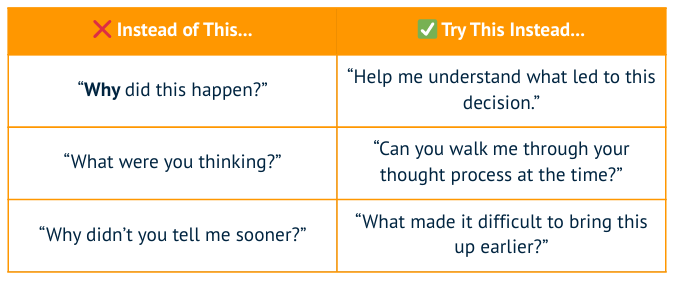
Many leaders shy away from tough questions out of fear of tension or resistance. But avoiding them can stunt growth and clarity. The playbook shares two key strategies:
-
Reframe from Accusation to Curiosity:
-
Acknowledge Emotion:
Recognize emotional cues like frustration or withdrawal, and name them:
“I sense this is tough—thank you for staying engaged.”
This echoes our Emotional Intelligence Playbook concept of managing the “emotional aftertaste” of every interaction—something we covered in Lead with Heart.
Neuroscience Says: Your Intent Matters More Than You Think
The playbook introduces the concept of mirror neurons—brain cells that cause us to subconsciously reflect others’ emotional states. When you stay calm, present, and empathetic, others will mirror that state back to you.
This isn’t just soft-skill fluff—it’s grounded in hard science. The emotional tone you set through voice, body, and energy shapes how people perceive and respond to you.
Adapting to Communication Styles Builds Inclusion
The playbook outlines four common communication styles:
-
Bottom Liners – Want you to get to the point.
-
Data & Context Seekers – Need background and rationale.
-
Pleasantries-First Communicators – Value warmth and human connection first.
-
Full Paragraph Storytellers – Process thoughts aloud in detail.
By flexing your approach to match your listener, you reduce friction and boost understanding—key tenets also emphasized in our post BRAND YOU, where self-awareness is foundational to effective influence.
Conversation Is a Core Leadership Competency
Here’s the bottom line: Your ability to lead through conversation is as important as your strategy, vision, or execution skills. Whether you’re holding a team accountable, coaching a direct report, or aligning stakeholders, your presence in the moment defines your impact.
The good news? These skills are learnable.
As with building a personal brand or developing executive presence, mastery comes through intention, feedback, and practice.
Let’s Make Every Conversation Count
Start by asking yourself:
-
What is my intention before each conversation—clarity or control?
-
Am I listening to understand or listening to respond?
-
Do I adapt my communication style to others, or expect them to adapt to me?
These questions reflect the powerful prompts in the playbook’s reflection section—a great tool to revisit regularly as you build these practices into habit.
Ready to Elevate Every Conversation?
If you’re serious about improving how you lead through conversation, we highly recommend downloading the full Conversations That Connect playbook. It’s packed with frameworks, prompts, and real-world scripts to help you navigate high-stakes discussions with clarity, empathy, and impact.
Download the playbook here: Conversations That Connect
You can also watch the full webinar recording session below:
More Resources for Leaders Who Communicate with Impact
-
How Do I Develop a Bolder Executive Presence—Yet Still Be Me?
-
BRAND YOU: Build a Personal Brand that Stands Out and Opens Doors
-
Lead with Heart: Emotional Intelligence for Impactful Leadership
We Are Your Partner for Leadership Growth
At the Leadership Coach Group, we are committed to empowering individuals and organizations with the tools and insights needed to thrive in leadership roles. We offer a range of services designed to support your growth and development:
-
One-on-One Executive Coaching – Personalized guidance to help leaders refine their personal brand and maximize their leadership potential.
-
Team Coaching – Strengthen collaboration, communication, and alignment within teams to drive collective success.
-
Leadership Training – Develop essential leadership skills through workshops and interactive learning experiences.
-
Leadership Assessments – Gain clarity on strengths and areas for growth through proven assessment tools.
-
Inspirational Speakers – Engage your teams with expert insights and motivation from experienced leadership coaches.
