
Leadership is about more than setting strategy, making decisions, and driving results. At its core, leadership is about people.
Every day, leaders communicate expectations, provide feedback, hire new talent, resolve conflict, and build relationships across their organizations. Yet many workplace challenges don’t happen because people lack ability or motivation. They happen because people communicate differently, process information differently, and respond to situations in different ways.
That’s where DISC comes in.
DISC is one of the world’s most widely used behavioral assessment frameworks. It helps leaders better understand communication styles, behavioral preferences, motivators, and how people naturally respond under pressure. Rather than placing people into rigid categories, DISC provides a practical framework for adapting communication, improving collaboration, and leading more effectively.
In this blog, we’ll introduce the DISC framework, explore the four DISC personality styles, discuss practical communication strategies, and share how leaders can apply DISC to hiring, coaching, and team development.
Understanding DISC and Why It Matters
DISC is based on four primary behavioral styles: Dominance (D), Influence (I), Steadiness (S), and Conscientiousness (C). Each style brings unique strengths, communication preferences, and approaches to work.
Understanding these differences helps leaders move beyond assumptions and develop stronger relationships with employees, colleagues, and clients. Greater self-awareness also enables leaders to recognize their own communication tendencies and adapt their approach to better connect with others.
Understanding the Four DISC Styles
Each DISC style contributes something valuable to a team.
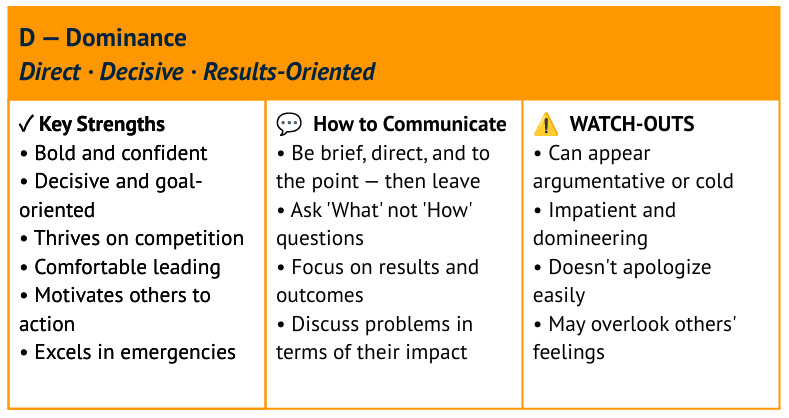
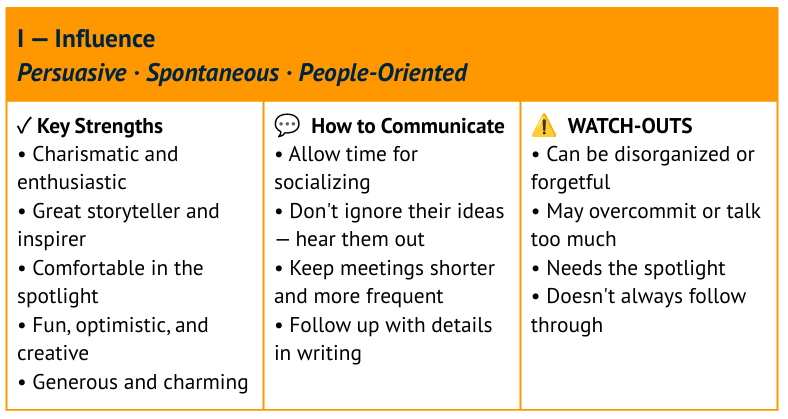
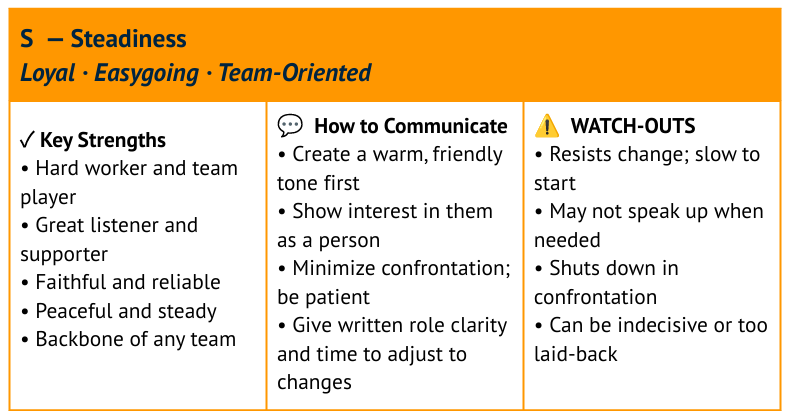
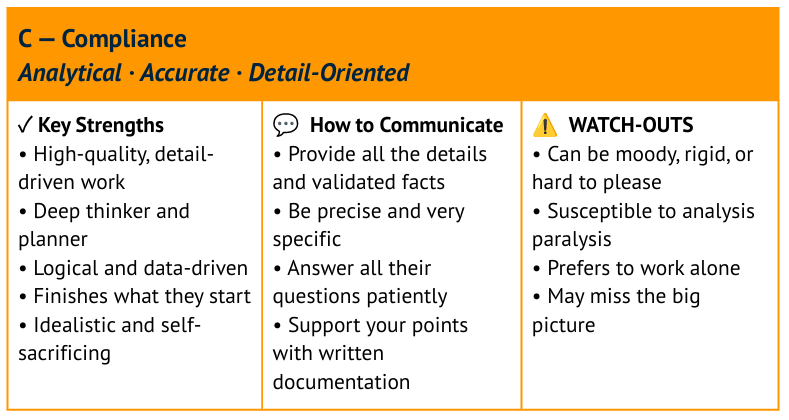
No style is better than another. High-performing teams succeed because they leverage the strengths of each personality type rather than expecting everyone to think and communicate the same way.
Communicating Effectively with Each DISC Style
One of the greatest benefits of DISC is learning that effective communication isn’t one-size-fits-all. The same message can be received very differently depending on who you’re speaking with. Great leaders recognize these differences and adapt their approach to connect more effectively with each personality style.
D (Dominance): Be Direct and Results-Oriented
D-types value efficiency and action. They prefer conversations that are focused and outcome-driven.
When communicating with D-types:
- Get to the point quickly.
- Focus on results, goals, and solutions.
- Be confident, direct, and honest.
- Give them autonomy and ownership whenever possible.
- Avoid excessive detail or unnecessary small talk.
I (Influence): Connect Before You Communicate
I-types thrive on relationships, collaboration, and enthusiasm. They enjoy conversations that are engaging and positive.
When communicating with I-types:
- Build rapport before discussing business.
- Show enthusiasm and acknowledge their ideas.
- Encourage discussion and collaboration.
- Keep meetings engaging and interactive.
- Follow up important conversations with written action items.
S (Steadiness): Create Trust and Stability
S-types appreciate patience, consistency, and supportive relationships. They prefer a calm approach and value feeling heard.
When communicating with S-types:
- Start with a friendly, personal conversation.
- Clearly explain expectations and next steps.
- Give them time to process information and change.
- Invite their input, even if they don’t volunteer it.
- Avoid unnecessary pressure or confrontation.
C (Conscientiousness): Lead with Facts and Logic
C-types value accuracy, structure, and well-supported decisions. They want to understand the details before moving forward.
When communicating with C-types:
- Come prepared with facts and supporting information.
- Be organized and specific.
- Explain the reasoning behind decisions.
- Answer questions thoroughly and patiently.
- Give them time to analyze before expecting a decision.
Effective communication isn’t about changing who you are. It’s about understanding what others need in order to communicate at their best. By adapting your approach to different DISC styles, you can build stronger relationships, reduce misunderstandings, and create a more engaged and productive team.
Applying DISC in Leadership, Hiring, and Team Development
DISC isn’t just a personality assessment. It’s a practical leadership tool.
Leaders can use DISC insights to coach employees more effectively, delegate work based on strengths, improve hiring decisions, and build more balanced teams. DISC also helps leaders recognize communication preferences, understand behavioral patterns, and create environments where individuals can perform at their highest potential.
Today, leaders can also take advantage of a variety of DISC assessments and technology platforms that provide additional behavioral insights. Whether using a free online assessment or working with a certified DISC practitioner, these tools can support stronger leadership and more informed people decisions.
Continue Your DISC Journey
DISC provides an excellent starting point for understanding yourself and the people around you, but leadership development doesn’t stop with one assessment. The greatest value comes from consistently applying these insights to everyday conversations, leadership decisions, and team interactions.
If you’d like to dive deeper into the DISC framework, we’ve created the DISC Leadership Playbook. It expands on the concepts introduced here with practical communication strategies, leadership applications, activities, and action steps you can use to strengthen your leadership and build more effective teams.
Download the DISC Leadership Playbook and start putting DISC into practice today.
Frequently Asked Questions
1. Do you have more resources about DISC?
Yes! If you’d like to explore DISC in greater depth, we invite you to watch our free webinar, DISC for Leaders: Read People Faster, Communicate Better & Hire Wisely. In this session, DISC-certified coaches Rob Followell and Angela Farmer explain the DISC framework, discuss practical leadership applications, and share strategies for improving communication, hiring, coaching, sales, and team development.
2. Do you offer a debrief for DISC assessment results?
Absolutely. Leadership Coach Group has DISC-certified coaches, including Rob Followell and Angela Farmer, who can help you interpret your DISC assessment and understand how to apply the results in your leadership and professional life. A personalized debrief can provide deeper insight into your communication style, strengths, motivators, and opportunities for growth.
You can book a complimentary coaching conversation to learn more here:
3. Are there other leadership assessments besides DISC?
Yes. While DISC is an excellent tool for understanding behavioral styles and communication preferences, it is just one of many assessments that can support leadership development. Depending on your goals, assessments such as Myers-Briggs Type Indicator, High 5 Strengths Finders Test, Integrative 9, Leadership Circle, Global Leadership Assessment, Google’s Project Oxygen, and Stakeholder Interview can provide additional insights into how you lead, make decisions, influence others, and work with teams.
Explore Leadership Coach Group’s full range of leadership assessments here.